Why Lending Runs on AI Now
Think about your last full working day. How much of it was spent making actual credit decisions — and how much was spent getting ready to make them?
If you're honest, the decision took minutes. The preparation took hours: reading bank statements line by line, cross-referencing an application against supporting documents, writing up a credit memo, chasing an arrears case through three systems and a call log. Lending has always sold itself as a judgment business. Day to day, it's an information business — and most of your week goes to moving, reading, and summarizing information.
That's exactly the work AI is built for. Which is why every serious lender is now racing to put it into the hands of people like you.
Where your hours actually go
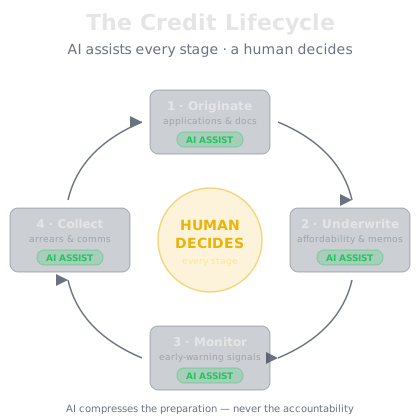
Walk through the credit lifecycle and count the reading and writing at every stage:
Origination — application packs, ID documents, bank statements, payslips, business accounts. Someone has to read all of it, check it against itself, and spot what doesn't add up.
Underwriting — affordability workups, risk assessments, credit memos, conditions, decline rationales. Hours of analysis compressed into documents someone above you will skim.
Monitoring — annual reviews, covenant checks, watchlist notes, sector updates. The files that quietly slip because origination always shouts louder.
Collections — arrears reports, customer correspondence, payment plan proposals, case notes for every contact. Half the job is documentation.
None of that is judgment. It's the information work that surrounds judgment — and it's precisely where AI removes hours without touching the decision itself.
The credit professional with AI vs. without
Without AI: A new application lands. You spend forty minutes reading three months of bank statements, building an affordability picture by hand, and another half hour drafting the memo. Meanwhile, two watchlist reviews slip to next week, and your arrears follow-up emails go out late and half-personalized.
With AI: You feed an anonymized version of the same statements into an approved AI tool and get a structured summary in two minutes — income stability, spending patterns, potential debt stress markers, each flagged for you to verify. You check every figure against the source documents, correct what the AI got wrong, and make your call. The memo starts from a draft, not a blank page. The arrears emails start from tailored drafts you review and send. Same decisions. Same decision-maker. A fraction of the preparation time.
Notice what didn't change: you verified the numbers, you made the call, you signed the memo, you sent the emails. AI compressed the preparation. It never touched the authority.
What the next 13 days will cover
This course walks the full lifecycle, one practical skill per day:
Days 2–6: your toolkit and data ground rules, how AI credit scoring actually works, AI-assisted application and affordability analysis, fraud red flags at origination, and credit memos in a fraction of the time.
Days 7–10: portfolio monitoring and early-warning signals, arrears segmentation, collections communications that comply, and the cases where AI must slow down — hardship and vulnerable borrowers.
Days 11–14: explainability and adverse action, fair lending and model governance, and finally your personal lending AI playbook plus a 90-day rollout plan.
One principle runs through every single lesson, and it's worth stating on day one: AI assists; a human makes every credit decision. Every limit approved, every decline issued, every email sent — a person is accountable, and in this course that person is you.