Day 5 of 14 · AI in Trade Credit Control
Credit Applications, Terms & Guarantees
⏱ 6 min
📊 Beginner
Yesterday you sized the credit limit. Today is about the paperwork that makes that limit enforceable — the credit application, the terms, and the guarantees that decide who gets paid when a customer runs out of money.
Here's the uncomfortable truth about trade credit: your leverage peaks the day before you ship. Before the first delivery, the customer will sign almost anything reasonable, because they want the goods. Six months later, when they're 60 days overdue and dodging your calls, that signed paperwork is often the only leverage you have left. Skip it, and you're just another unsecured voice in the queue.
What a solid credit application captures
A credit application isn't a formality — it's your evidence file. A solid one captures:
Exact legal identity — the registered company name, number, and trading address. Chasing "Apex Supplies" is useless if the entity that owes you is "Apex Supplies (Midlands) Ltd" — or worse, if they've quietly switched entities mid-relationship.
Signatories and authority — who signed, their role, and confirmation they can bind the company. A credit application signed by someone with no authority is a problem you discover at the worst possible moment.
Trade references and bank details — not because references are foolproof (nobody lists their angriest supplier), but because refusing to provide them is itself a signal.
Agreement to YOUR terms — the application should explicitly incorporate your terms of sale, signed and dated, before the first order. Otherwise you may end up trading on their purchase-order terms without realizing it.
Knowledge Check
Why does the lesson say your leverage peaks the day before you ship?
A
Because shipping costs are easier to negotiate upfront
B
Before delivery the customer will agree to reasonable terms because they want the goods; after they owe you money, your negotiating power drops sharply
C
Because that's when the customer's credit score is highest
D
Because credit applications legally expire after the first shipment
Before the first delivery, the customer needs something from you, so signing sensible terms is easy. Once they have the goods and owe you money, the incentive flips — which is exactly why the paperwork has to be in place before the first invoice, not after the first missed payment.
The four clauses that protect you
You don't need to speak legalese to understand the protective core of your terms. Four clauses do most of the work:
Payment terms — exactly when payment is due, from what trigger date (invoice date, not "receipt of statement"). Vague terms create honest-sounding disputes.
Late-payment interest — the right to charge interest and costs on overdue amounts. Many jurisdictions give you statutory rights here even if the contract is silent — but a clear clause makes the conversation easier. You won't always charge it; having the right to changes the tone of every chaser.
Retention of title (ROT) — the goods remain yours until they're paid for. If the customer becomes insolvent, a well-drafted ROT clause can mean you recover your stock while unsecured creditors recover pennies. It only works if it's in the signed terms and you can identify your goods.
Personal guarantees — for a thin, new, or wobbly company, a director personally guarantees the debt. Directors who won't stand behind their own company are telling you something. Guarantees are sensitive documents — this is firmly lawyer territory.
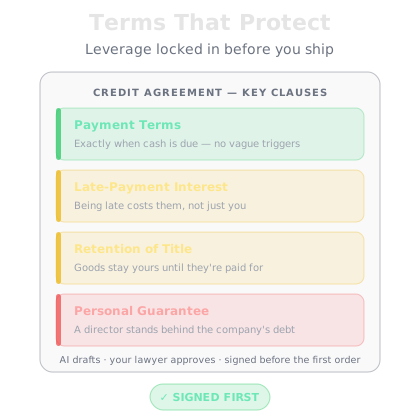
Four clauses carry most of the protection. Every one of them only works if it was signed before the first shipment — not negotiated after the first missed payment.
AI drafts and explains — a lawyer approves
Here's where AI earns its place in this workflow. It's genuinely good at three things:
Explaining clauses in plain English. Paste a clause from your existing terms (they're your documents — no customer data involved) and ask what it means, what it protects against, and what questions to ask a lawyer about it. You'll walk into the legal review understanding your own contract.
Drafting first versions. AI can produce a solid first draft of a credit application form or a summary of terms for your sales team. That draft is a starting point that saves your lawyer billable hours — it is never the finished product.
Spotting gaps. Ask AI to compare your current application form against a checklist of what a credit application should capture. It will consistently find the missing pieces — no ROT clause, no signatory authority line, no agreement-to-terms wording.
The hard rule: AI drafts and explains; a qualified lawyer in your jurisdiction approves anything a customer signs. Contract law varies by country, ROT clauses fail on drafting technicalities, and guarantees have formal requirements. This is exactly the place to spend money on legal advice — once, on a template you'll reuse for years.
Explain "retention of title" in plain English, then draft a short summary I can give our sales team so they understand why we insist on signed credit applications before first orders.
**Retention of title, plainly:** Normally, when you deliver goods, ownership passes to the customer even if they haven't paid. A retention of title (ROT) clause changes that — the goods legally stay YOURS until the invoice is paid. If the customer goes bust still owing you, you can claim your identifiable stock back instead of joining the queue of unsecured creditors.
It only works if: (1) it's in signed terms agreed BEFORE delivery, (2) you can identify your goods at their premises, and (3) it's drafted correctly for your jurisdiction — get it lawyer-approved.
**Draft summary for sales:**
"Why we need signed credit apps before first orders — 30-second version:
• The signed application is what lets us give your customer credit terms at all.
• It locks in OUR terms — including our right to reclaim goods if a customer fails, and to charge interest on late payment.
• Without it, a customer failure can turn your commission into our write-off.
• It takes the customer 10 minutes. Chasing an unpaid invoice without it takes months.
Deal not real until the paperwork's in — and it protects your pipeline too."
Want me to tighten it to fit on one slide?
Yes, and add one line about personal guarantees for new companies.
One-slide version:
**"No paperwork, no shipment — here's why"**
• Signed credit app = the customer's ticket to credit terms.
• It locks in our terms: payment dates, late-payment interest, and our right to reclaim goods if they fail.
• For new or thin companies, we may ask a director to personally guarantee the account — if they won't back their own company, that tells us something.
• 10 minutes of signing now beats months of chasing later.
Reminder: this is internal explainer material — the actual terms and any guarantee documents come from our lawyer-approved templates, not from this chat.
↻ Replay conversation
Clause Check
A customer becomes insolvent owing you for goods still sitting in their warehouse. Which clause gives you the best chance of getting your stock back?
A
A trade reference from another supplier
C
A properly drafted retention of title clause in terms the customer signed before delivery
D
Payment terms of net 30 days
Retention of title keeps ownership of the goods with you until they're paid for, so in an insolvency you can claim identifiable stock back rather than queueing as an unsecured creditor. But it only works if it was in signed terms before delivery and was drafted correctly — which is why the template needs a lawyer's approval.
Final Check
What's the right division of labor between AI and a lawyer on your credit paperwork?
A
Lawyers draft everything from scratch; AI has no useful role in contracts
B
AI approves the terms as long as you review them carefully yourself
C
AI explains clauses, drafts first versions, and spots gaps — a qualified lawyer approves anything a customer actually signs
D
AI produces the final terms; a lawyer is only needed if a dispute goes to court
AI is excellent at explaining your clauses in plain English, producing first drafts, and finding gaps in your application form — that preparation saves real legal fees. But contract enforceability turns on jurisdiction-specific detail, so the documents customers sign must be approved by a qualified lawyer. AI drafts; humans and their lawyers decide.
📝
Day 5 Complete
"The time to get leverage is before you ship — AI drafts it, your lawyer blesses it."
Tomorrow — Day 6
Invoice-to-Cash Hygiene
Tomorrow you'll trace the invoice-to-cash chain, find where your own process leaks cash, and use AI checklists to plug every one.